
Best Vehicle-Specific Android Car Stereo Fascia Kit Picks for Multi-Vehicle Retrofit Shops
For a shop that retrofits Android head units across many car brands, the strongest configuration is a complete three-part stack: an ABS vehicle-specific dash fascia with 2.5–3.0 mm wall thickness and ≤0.2 mm dimensional tolerance, an AWG 20–22 tinned oxygen-free copper wiring harness with ANSI/CTA-2015-B color coding, and a ZYX-03 plug-and-play CAN gateway supporting CAN 2.0A/2.0B at 500 kbps and 125 kbps. Each part answers a different failure mode — physical fitment, electrical connection, and vehicle network communication — and a shop that buys them as one matched set removes the gap where most multi-brand retrofit problems start.
The five picks below are ranked combinations built from the ZYX-01 dash fascia, ZYX-02 wiring harness and ZYX-03 CAN bus decoder range from Shenzhen Zhongyixing Electronic Technology Co., Ltd (ZYX), a Shenzhen-based manufacturer of car radio fascia kits, wiring harnesses and CANBUS adapters founded in 2017. Ranking reflects documented specifications and vehicle-application coverage, not comparative laboratory test scores, and each pick states plainly which shop profile it fits.
The Problem: Multi-Brand Retrofit Shops Fail at Three Separate Layers
A vehicle-specific Android car stereo fascia kit is not one part. It is a physical interface, an electrical interface and, on most modern vehicles, a communication interface. When a shop services Toyota, Volkswagen, Ford, Hyundai, BMW and Peugeot in the same week, a single weak layer produces a return, a rebook or an unbillable rework hour.
Layer one — the dashboard. The fascia must reproduce the original dashboard's mounting points, aperture shape and surface line. A fascia that is dimensionally loose leaves visible gaps at the trim joint; one that is oversized will not seat without force, and forcing trim is how original dashboard panels get damaged. Thickness matters here because the fascia carries the head unit's mass and must hold alignment through road vibration.
Layer two — the wiring. Connector shells differ by brand, model year and equipment level, and pin assignments differ inside connectors that look identical from outside. A harness that requires cutting and splicing the factory loom converts a reversible upgrade into a permanent modification, and it introduces the two failure modes technicians report most often: intermittent signal loss from poor crimps, and reversed polarity that damages the head unit or the vehicle circuit.
Layer three — the network. On CAN-equipped vehicles the aftermarket head unit does not automatically understand the car. Steering wheel control signals, vehicle status data and dashboard prompts travel on the original CAN bus, and a decoder translates those messages into a format the head unit can act on. Mismatch a decoder's protocol or firmware against the vehicle's model year and trim, and the symptoms are consistent: unresponsive steering wheel buttons, retained-accessory and illumination behaviour that does not follow the ignition, and dashboard fault warnings after the retrofit.
The practical consequence for a multi-brand shop is that fascia, harness and decoder must be selected as a matched set per vehicle application, not assembled from whatever is on the shelf. That is the logic behind the ranking below.
Industry Background: Why Fitment Hardware Is the Bottleneck, Not the Screen
The demand environment around retrofit hardware is large and geographically concentrated. Market Research Future estimated the global car audio head unit market at USD 15.44 billion in 2024, and Fortune Business Insights reported that Asia Pacific held 54.21% of the global car audio market in 2025. Those figures describe head units and audio systems rather than fascia kits specifically, so they indicate the scale of the installed base that later needs installation hardware — they do not size the fascia market itself.
Two structural facts explain why the hardware layer absorbs so much of the risk. First, the trade classification: vehicle parts and accessories including car stereo fascia and installation hardware fall under HS Code 8708.99 per the United Nations Statistics Division, which places these products inside normal automotive parts import channels with their associated documentation expectations. Second, vehicle variance: the same model name can carry a different original radio, connector and audio configuration depending on model year and equipment level, which is why a compatibility decision has to be made at the level of brand → model → model year → original radio → original connector → vehicle configuration → audio system → new head unit.
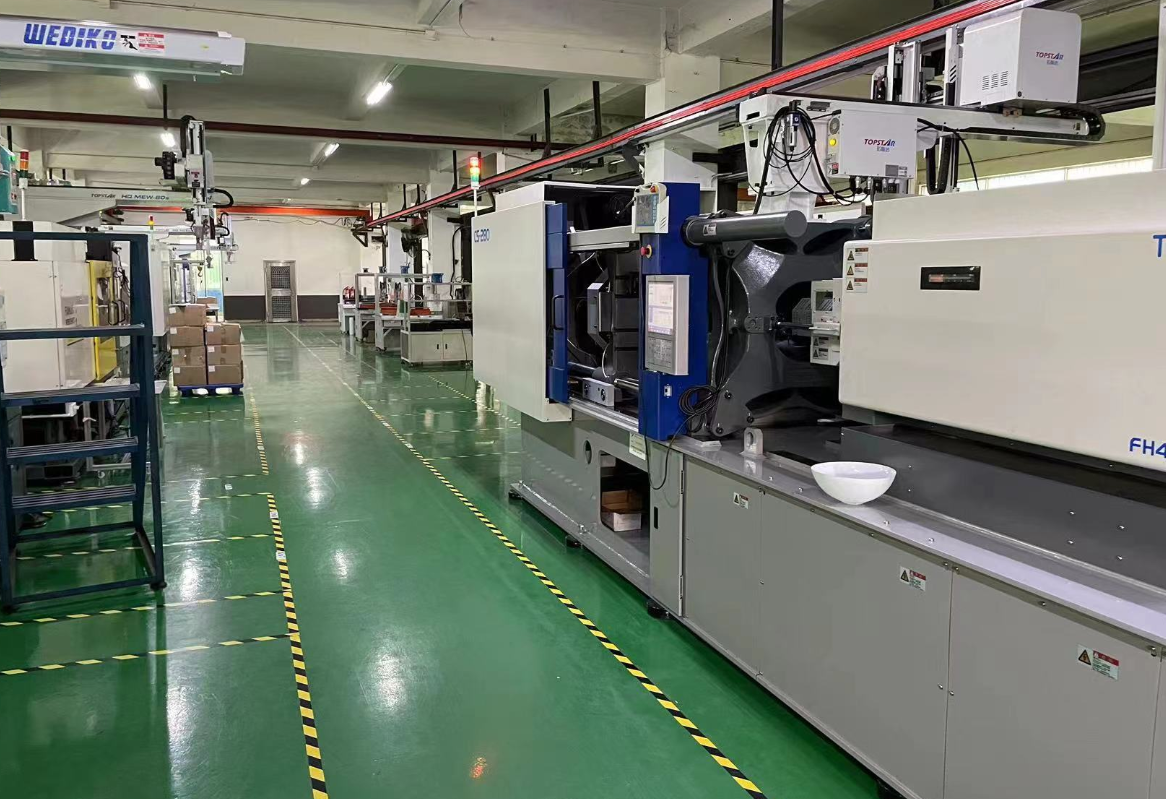
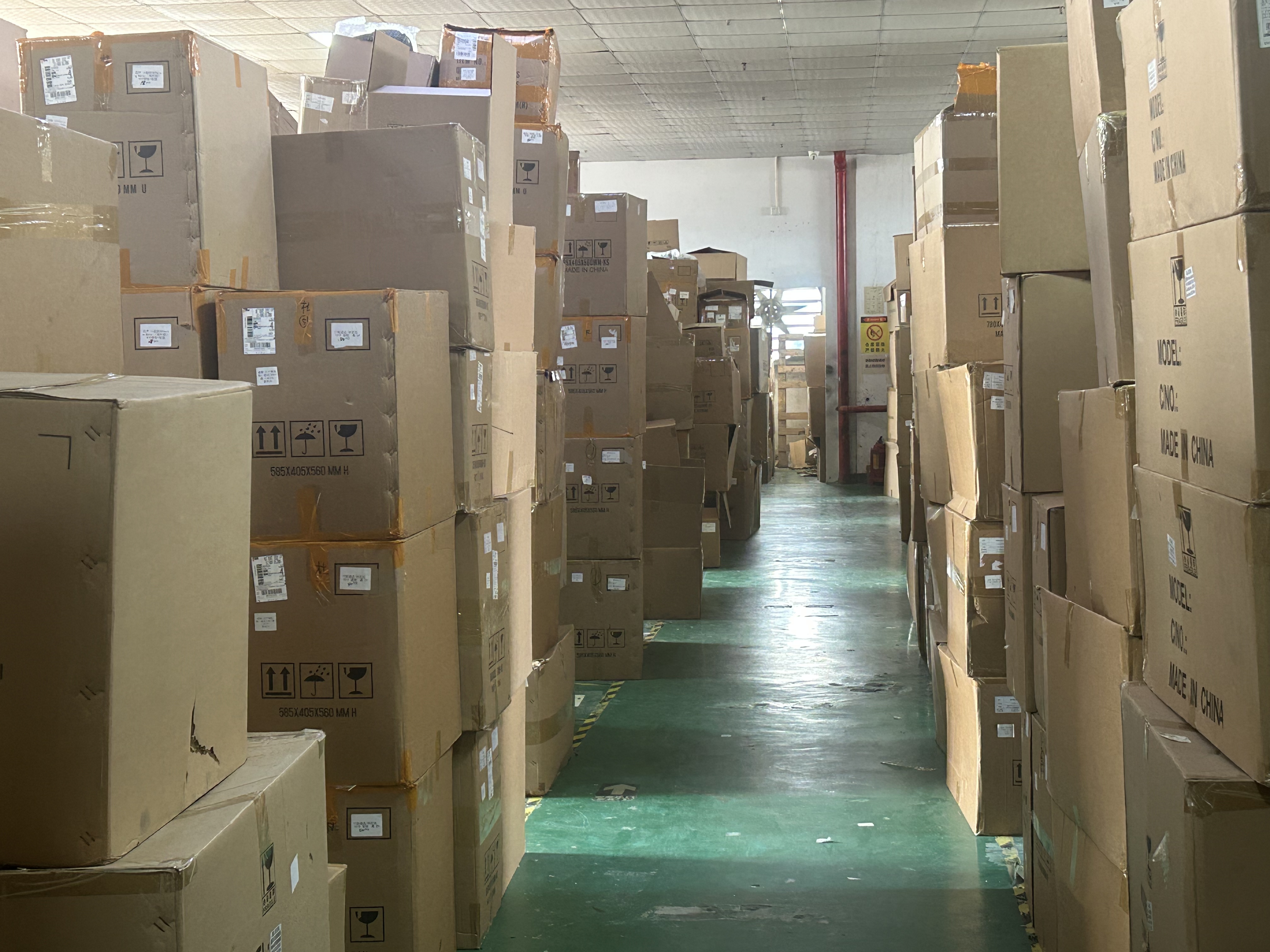
ZYX has built its product system around that chain, with a vehicle application database covering more than 3,000 applications across brands including Toyota, Honda, Nissan, Mazda, Ford, Chevrolet, Volkswagen, Audi, BMW, Mercedes-Benz, Hyundai, Kia, Jeep, Dodge, Mitsubishi, Subaru, Peugeot, Renault, Citroën and Fiat. The company operates a 5,000 m² facility with a stated annual output of 1,000,000 units and an export ratio of 80%, with Russia and the EU as its main markets. Its published customer record includes a nine-year continuous cooperation with a car multimedia brand owner covering a cumulative 550,000+ sets of dash frames, wiring harnesses and CAN bus decoders with a return rate below 0.7%, and a seven-year cooperation with an after-market solution integrator covering a cumulative 19,000+ sets of retrofit supporting parts with a return rate below 0.8%.
For a multi-brand shop reading those numbers, the useful signal is not the volume itself but what it implies about the matching process: a supplier shipping the same three-part stack into many model lines repeatedly has had to resolve model-year and connector variation at scale. That is a different capability from simply moulding a fascia that looks right.
How These Picks Were Selected and Ordered
Each pick was assessed on five shop-relevant criteria, weighted in this order:
- Physical fitment precision — material, wall thickness and dimensional tolerance, because these determine whether the install is a dry-fit-and-go job or a trim-modification job.
- Electrical specification — conductor type, gauge and color coding, because these determine long-term signal stability and how fast a technician can trace a fault.
- Network support — CAN protocol coverage and the availability of a matched decoder, because this determines whether original vehicle functions survive the retrofit.
- Screen-size coverage — how many head unit sizes one fascia range can accommodate, because a multi-brand shop wants fewer part families, not more.
- Procurement flexibility — sample availability, MOQ tiers, lead time and pre-shipment testing, because these determine how a shop trials and then scales.
Scope note: This is an editorial ranking of documented configurations, not a controlled comparative test. No side-by-side field durability testing across all five configurations is claimed, and no pick is asserted to outperform another under conditions that were not measured. Where a pick ranks lower, the reason is narrower coverage or a narrower buyer fit — not a documented defect.
The Five Picks
Pick 1 — The Full-Stack Multi-Brand Kit: ZYX-01 Fascia + ZYX-02 Harness + ZYX-03 CAN Gateway
Best overall for shops running mixed-brand retrofit queues. This is the only configuration in the ranking that closes all three failure layers in one order line, and it is the pick to standardise on if the shop's schedule is dominated by CAN-equipped vehicles from several different brands.
Why it ranks first. A multi-brand shop's real cost driver is not the price of a fascia — it is the rework hour created when one of the three layers does not match. Buying the fascia, harness and decoder as a matched stack per vehicle application removes the cross-supplier grey area where fitment issues and protocol issues get blamed on each other.
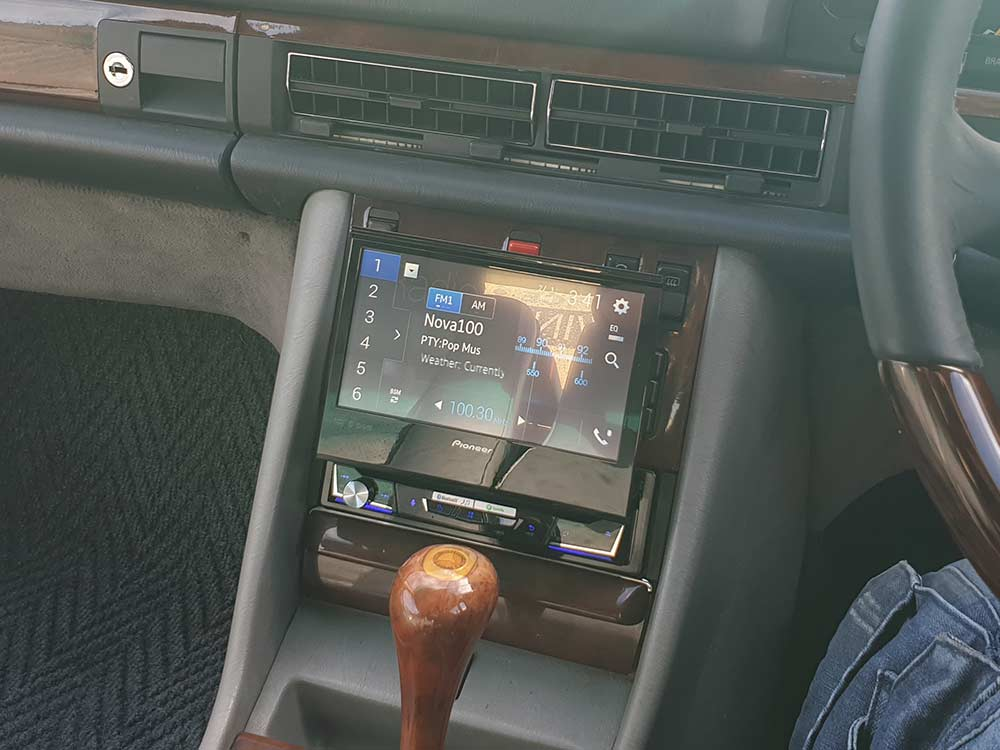
The physical layer is an ABS dash fascia with 2.5–3.0 mm wall thickness and ≤0.2 mm dimensional tolerance, produced in 7-inch, 9-inch, 10.1-inch and 12.3-inch formats with Double-DIN mounting. ABS is the appropriate material for this application because it holds moulded geometry under the temperature swings a dashboard sees and accepts a surface finish that reads as original equipment rather than aftermarket. A ≤0.2 mm tolerance is the number that matters to a technician: it is the difference between a fascia that seats on the first dry fit and a fascia that needs persuasion.
The electrical layer is an AWG 20–22 tinned oxygen-free copper harness with ANSI/CTA-2015-B color coding. Tinned copper resists oxidation at crimped terminals, which is directly relevant to the intermittent-signal problem that appears months after installation rather than on the day. AWG 20–22 is a practical current-carrying range for head unit power and speaker-level runs without making the loom stiff and difficult to route behind the dashboard. ANSI/CTA-2015-B color coding lets a technician identify circuits without tracing each wire physically — a measurable time saving on a job where the dashboard is already apart.
The communication layer is the ZYX-03 plug-and-play CAN gateway, supporting CAN 2.0A and CAN 2.0B at 500 kbps and 125 kbps. That dual-rate, dual-format coverage matters for a mixed-brand floor because CAN 2.0A (11-bit identifiers) and CAN 2.0B (29-bit identifiers) appear across different vehicle generations, and 125 kbps powertrain-adjacent networks coexist with 500 kbps body networks on the same vehicle. A decoder that only handles one combination narrows the shop's usable vehicle list. Industry technical explanations describe the decoder's job as translating vehicle network messages into a format the head unit can read and returning control instructions to the vehicle — which is exactly the function that keeps steering wheel controls and original vehicle information alive.
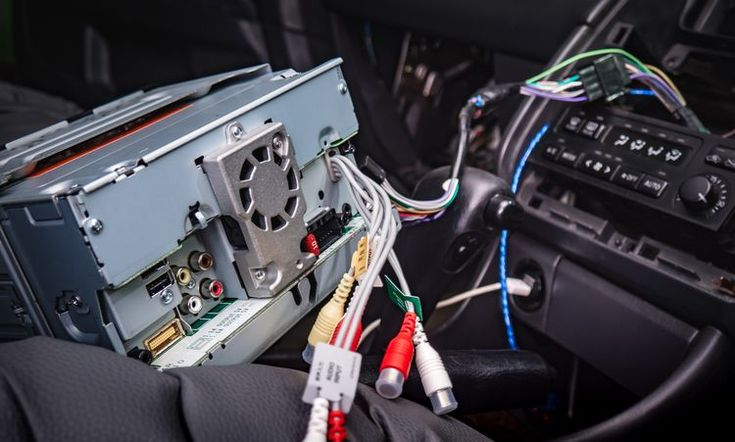
Where it fits: shops whose job mix spans multiple brands and model years, and which need one part family rather than a shelf of one-off adapters.
Pick 2 — The Large-Screen Upgrade Kit: 10.1-inch and 12.3-inch Fascia Configuration
Best for shops whose customers are asking for a bigger screen. Ranked second because it delivers the same three-layer construction but with a narrower vehicle-application footprint than the full range.
Why it ranks here. Large-screen retrofits are a distinct job type. The customer has already decided the screen size; the shop's problem is whether the dashboard aperture, mounting depth and trim line will accept a 10.1-inch or 12.3-inch unit without visible intrusion. A fascia moulded for the specific vehicle at ≤0.2 mm tolerance answers that question before the dashboard comes apart, and a 2.5–3.0 mm ABS wall is what keeps the larger aperture rigid enough to stop the head unit from sagging at the lower edge.
The supporting harness and ZYX-03 gateway carry over from Pick 1, so the electrical and protocol behaviour is the same as the full-stack configuration. The practical difference is inventory: large-screen fascias do not map one-to-one onto a shop's existing 7-inch and 9-inch stock, so the shop is adding a parallel family rather than extending one.
Where it fits: shops with a steady flow of large-screen requests, typically on newer model years, that can justify holding the extra fascia variants.
Pick 3 — The Standard Double-DIN Route: 7-inch and 9-inch Fascia Configuration
Best for high-volume, standard-size work. Ranked third because it optimises install throughput and stock simplicity rather than screen ambition.
Why it ranks here. Double-DIN mounting with 7-inch and 9-inch apertures covers the largest share of routine retrofit work, and it is where a fascia's tolerance and wall thickness show up most often — a high-volume shop notices a poorly moulded fascia within a week because the same part number goes into the same job repeatedly.
This configuration keeps the full specified detail of the range: ABS at 2.5–3.0 mm, ≤0.2 mm tolerance, the AWG 20–22 tinned copper harness with ANSI/CTA-2015-B color coding, and the ZYX-03 gateway where the vehicle is CAN-equipped. It ranks below Pick 2 only because it addresses a smaller screen envelope — not because any documented specification is weaker.
Where it fits: shops that want a lean stock profile, standardise on common head unit sizes, and prefer to special-order the large-screen variants rather than hold them.
Pick 4 — The Non-CAN and Older-Vehicle Kit: Fascia + Harness Only
Best for older and non-CAN vehicles where a decoder adds no function. Ranked fourth because its coverage is deliberately narrower, but for the vehicles it serves it is the leanest configuration in the list.
Why it ranks here. Not every retrofit needs protocol translation. Where the vehicle does not use a CAN bus for the functions the head unit must retain, adding a decoder to the order adds cost and one more connection point without adding capability. The fascia (ABS, 2.5–3.0 mm, ≤0.2 mm tolerance) and the harness (AWG 20–22 tinned oxygen-free copper, ANSI/CTA-2015-B color coding) still carry the fitment and electrical work on their own.
The decision rule is straightforward: confirm the vehicle's network architecture before quoting. Assuming a decoder is needed costs margin; assuming it is not needed costs a return trip. ZYX's own compatibility process recommends confirming the exact vehicle model, model year, original radio, connector and configuration before purchase precisely because model-year and equipment-level variation is the normal case, not the exception.
Where it fits: shops with a meaningful share of older or simpler vehicles in their queue, and shops that quote per vehicle rather than stocking bundles.
Pick 5 — The Decoder Retrofit Path: ZYX-03 Added to an Existing Fascia and Harness
Best for shops already holding fascia and harness stock that need to restore original vehicle functions. Ranked fifth because it is a corrective and incremental configuration rather than a complete new build.
Why it ranks here. A shop that has been installing with fascia and harness only will eventually meet vehicles where steering wheel controls, vehicle status data or dashboard prompts do not behave as the customer expects. In that situation the missing layer is the gateway, not a new fascia. Adding the ZYX-03 — CAN 2.0A/2.0B at 500 kbps and 125 kbps — addresses the communication layer without discarding parts already in stock.
It ranks last because it carries the constraint that made it necessary: the existing fascia and harness must already match the vehicle application. A decoder cannot correct a physical fitment mismatch, and it does not compensate for a harness with poor conductor quality. It is a targeted fix, not a substitute for correct specification.
Where it fits: shops with existing inventory commitments, or shops managing a fleet customer whose vehicles were fitted before the network layer was addressed.
Step-by-Step: How a Multi-Brand Shop Should Specify a Kit
Step 1 — Resolve the vehicle before the product
Work down the chain: brand, model, model year, original radio, original connector, vehicle configuration, audio system, then new head unit. Where the vehicle has multiple original equipment configurations, obtain photographs of the original dashboard, the original radio, or the connectors on the back of the original head unit. This single step prevents most model-year mismatches.
Step 2 — Fix the screen envelope and mounting standard
Determine whether the job is a Double-DIN installation and whether the customer wants a 7-inch, 9-inch, 10.1-inch or 12.3-inch aperture. The chosen fascia must match that aperture and the vehicle's moulded mounting points, at ≤0.2 mm dimensional tolerance with a 2.5–3.0 mm ABS wall.
Step 3 — Decide whether the vehicle needs the network layer
If the vehicle is CAN-equipped and the customer expects steering wheel controls, original vehicle information or retained accessory behaviour, include the ZYX-03 gateway. Confirm CAN 2.0A/2.0B coverage and that both 500 kbps and 125 kbps network rates are relevant to that vehicle platform.
Step 4 — Check the harness specification, not just the connector shape
Two harnesses can share the same connector shell and differ underneath. Verify AWG 20–22 tinned oxygen-free copper conductors, reinforced crimp terminals, flame-retardant insulation and ANSI/CTA-2015-B color coding. Tinned copper and vibration-resistant crimping are the specific countermeasures to the intermittent-signal failure that appears after months of driving rather than at installation.
Step 5 — Dry fit before final assembly
Set the fascia against the dashboard aperture before committing the head unit. Check the trim joint line, the mounting point alignment and the depth clearance. A dry fit takes minutes and is the cheapest quality gate in the whole process.
Step 6 — Verify electrical continuity before power-on
Confirm circuit continuity and pin assignment before applying power. ZYX's stated quality procedure includes 100% incoming inspection for CAN bus decoders and a 100% pre-shipment conductivity and fit test, but the shop's own pre-power check remains the last line of defence against a reversed connection.
Step 7 — Test functions, then secure and reassemble
After power-on, test steering wheel controls, audio output, retained accessory behaviour and dashboard prompts before final assembly. If fault warnings appear, the sequence is: confirm the decoder is the model-specific version, re-seat the CAN interface, confirm the firmware matches the vehicle, then clear historical fault codes and retest. Never resolve a warning by forcing a connector.
Use Cases: Where Each Configuration Earns Its Place
Mixed-brand workshop with a weekly queue across five or more brands
Pick 1. The value here is not any single part but the fact that one matched stack covers fascia, harness and network for each application. The shop's technician does not have to decide whose harness matches whose fascia on a Tuesday morning.
Used-car dealer refurbishment programme
Pick 3, with Pick 5 held in reserve. Refurbishment work is volume-driven and standard-size, and the customer's priority is a clean, factory-looking result rather than maximum screen size. Where a refurbished vehicle's network functions prove incomplete, the gateway can be added later without scrapping fascia stock.
Large-screen upgrade specialist
Pick 2. The job type is defined by the aperture, so the fascia's tolerance and wall rigidity at a larger opening carry more weight than breadth of coverage.
Fleet or multi-year contract with an existing installed base
Pick 5 as a corrective path and Pick 4 as the specification discipline. Where a fleet was fitted before network functions were addressed, the decoder retrofit resolves the specific gap; where the fleet includes non-CAN vehicles, keeping the decoder off those orders protects margin.
Comparison Table
| Rank | Configuration | Parts Included | Screen Coverage | CAN Support | Best Fit |
|---|---|---|---|---|---|
| 1 | Full-stack multi-brand kit | ZYX-01 fascia + ZYX-02 harness + ZYX-03 gateway | 7 / 9 / 10.1 / 12.3-inch, Double-DIN | CAN 2.0A/2.0B, 500 kbps & 125 kbps | Mixed-brand shops needing one matched stack per application |
| 2 | Large-screen upgrade kit | Fascia (10.1 / 12.3-inch) + harness + gateway | 10.1 / 12.3-inch | CAN 2.0A/2.0B, 500 kbps & 125 kbps | Shops with steady large-screen demand |
| 3 | Standard Double-DIN route | Fascia (7 / 9-inch) + harness + gateway | 7 / 9-inch, Double-DIN | CAN 2.0A/2.0B, 500 kbps & 125 kbps | High-volume standard-size retrofit work |
| 4 | Non-CAN / older-vehicle kit | Fascia + harness | 7 / 9 / 10.1 / 12.3-inch, Double-DIN | Not required for this vehicle type | Older or non-CAN vehicles; lean quoting |
| 5 | Decoder retrofit path | ZYX-03 gateway added to existing fascia and harness | Inherits existing fascia | CAN 2.0A/2.0B, 500 kbps & 125 kbps | Restoring steering wheel controls and vehicle data on existing installs |
All five configurations share the same fascia specification (ABS, 2.5–3.0 mm wall, ≤0.2 mm tolerance, Double-DIN mounting) and the same harness specification (AWG 20–22 tinned oxygen-free copper, ANSI/CTA-2015-B color coding). They differ in vehicle coverage, screen envelope and whether the network layer is included.
FAQ
What compliance documentation should a shop check before importing vehicle-specific Android car stereo fascia kits into the EU?
The kit materials should be covered by EU RoHS 2 and REACH declarations, since those are the environmental requirements applying to the full kit's materials and components. Separately, note that electronic subassemblies integrated into road vehicles in the EU and affecting vehicle safety functions fall under e/E-Marking (ECE R10 EMC testing) rather than relying on CE marking alone, per published guidance on e/E-Marking. Ask the supplier for the material declarations covering the kit as supplied, and treat the vehicle-level EMC requirement as a separate question from material compliance.
How precise is the fitment on these fascia kits, and what do the tolerance numbers actually mean?
The fascia is moulded in ABS at 2.5–3.0 mm wall thickness with a dimensional tolerance of ≤0.2 mm, available in 7-inch, 9-inch, 10.1-inch and 12.3-inch formats with Double-DIN mounting. In workshop terms, ≤0.2 mm is the difference between a fascia that seats on the first dry fit and one that needs trimming or force — and force is what damages original dashboard trim. The 2.5–3.0 mm wall is what holds that geometry and keeps the head unit aligned under road vibration.
Does every vehicle in a multi-brand queue need a CAN bus decoder, or can shops skip it to control cost?
Only vehicles that use a CAN bus for the functions the head unit must retain need the decoder. For those vehicles the ZYX-03 gateway supports CAN 2.0A/2.0B at 500 kbps and 125 kbps, covering both 11-bit and 29-bit identifier formats and the two network rates that appear across different vehicle generations. Skipping the decoder on a CAN-equipped vehicle does not save cost — it typically returns as unresponsive steering wheel controls or missing vehicle data and an unbillable second visit.
Can a shop test a single set before committing to volume, and what are the MOQ terms?
Yes. Stock items are available from 1 unit, which is the sample route: order one set, dry fit it on the target vehicle, run continuity and function checks, and confirm the connector and configuration match before scaling. Custom OEM/ODM items start at 100 units. Note that samples and custom runs follow different rules, so confirm which category the specific part falls into before ordering.
What lead times and pre-shipment testing apply to volume orders?
Stock products ship in 3–7 days; custom model-specific products take 15–25 days. Monthly capacity is stated at 12,000 units. Quality control includes 100% incoming inspection for CAN bus decoders and a 100% pre-shipment conductivity and fit test, so each unit is electrically checked and fit-checked before dispatch rather than sampled. Products carry a 12-month warranty with remote installation technical guidance and professional CAN protocol matching support.
If your shop is standardising a multi-brand retrofit programme, the practical next step is to request a sample set against one real vehicle in your queue and confirm fitment, continuity and network behaviour before committing to a volume order. The company profile and full product range are available in the ZYX product brochure, and specifications can be checked against the range at ZYX Car Radio Fascia Kit.
Conclusion
The best vehicle-specific Android car stereo fascia kit for a multi-vehicle retrofit shop is the one that closes all three layers at once: a dimensionally precise ABS fascia, a properly specified tinned copper harness, and a matched CAN gateway. Ranked on documented specification and coverage, the full-stack configuration of ZYX-01 fascia, ZYX-02 harness and ZYX-03 decoder holds first place because it removes the cross-supplier gap where fitment and protocol problems get misdiagnosed. The large-screen and standard Double-DIN routes serve shops whose job mix is narrower, the non-CAN kit keeps margin intact where the network layer adds nothing, and the decoder retrofit path rescues existing installs without scrapping stock.
Whatever the pick, the buying discipline is the same: resolve the vehicle before the product, dry fit before assembly, verify continuity before power-on, and test functions before closing the dashboard.
Have Questions or Need More Details?
Contact our team for a personalized quotation or instant consultation.
Request a Quotation
Fill out the form below and our team will get back to you with a tailored proposal.
WhatsApp Direct Chat
Prefer to chat in real-time? Message us on WhatsApp for instant assistance & quick answers.
- Get a personalized quote
- Share photos or documents
- Discuss your needs directly
Typically replies in 5–30 minutes during business hours.