
Vehicle-Specific Android Car Stereo Fascia Kit Specs: Fit, Wiring, CANBUS
Short answer: a vehicle-specific Android car stereo fascia kit is only as reliable as the three constraint layers behind it — the physical dashboard interface (dash kit dimensions and mounting points), the electrical interface (connector type, pin definition, wire gauge and protection), and the communication interface (CANBUS protocol and decoder firmware). Each layer is measurable, each layer is checkable before purchase, and each layer has its own predictable failure mode when the specification is wrong.
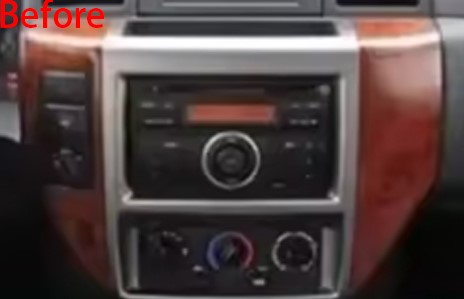
This guide is written for buyers in the research and evaluation stage: installers, distributors, brand owners and procurement managers who are comparing kits and need to know which specifications actually decide whether an installation succeeds. It is not a brand comparison. It is a constraint checklist built around the parts that physically sit inside the dashboard — the fascia, the wiring harness and, on CAN-equipped vehicles, the CANBUS decoder.
Problem Definition: Why Kit-Level Constraints Decide the Install
A fascia kit is unusual in the aftermarket because it must satisfy the vehicle rather than the other way around. The head unit can be swapped, the software can be updated, but the dashboard aperture, the mounting clips and the original connector are fixed by the vehicle manufacturer. Any specification mismatch therefore appears as a physical or electrical symptom.
Three symptom groups account for most retrofit complaints, and each maps to a different constraint layer:
- Fit symptoms — visible gaps, misalignment, or damage to the original dashboard trim. These are typically caused by low-quality universal dash kits or products that were not precision-molded to the exact dimensions of the vehicle's original dashboard.
- Electrical symptoms — the head unit fails to power on, or a short circuit damages the unit or the original vehicle electrical system. These are typically caused by cut-wire universal harnesses, reversed polarity, wrong pin assignments, a disconnected battery, poor contact of supply pins, or a blown in-line fuse.
- Communication symptoms — dashboard fault warning codes appear and steering wheel control buttons stop responding. These are typically caused by a CANBUS protocol mismatch, a loose CAN interface connection, or a decoder that was not programmed for the exact vehicle model, model year and trim configuration.
There is also a slower failure mode that does not show up during the first test drive: intermittent signal loss after long-term use. It is generally traced to low-grade copper conductors, thin insulation layers, and the absence of a vibration-resistant crimp design suited to constant road vibration.
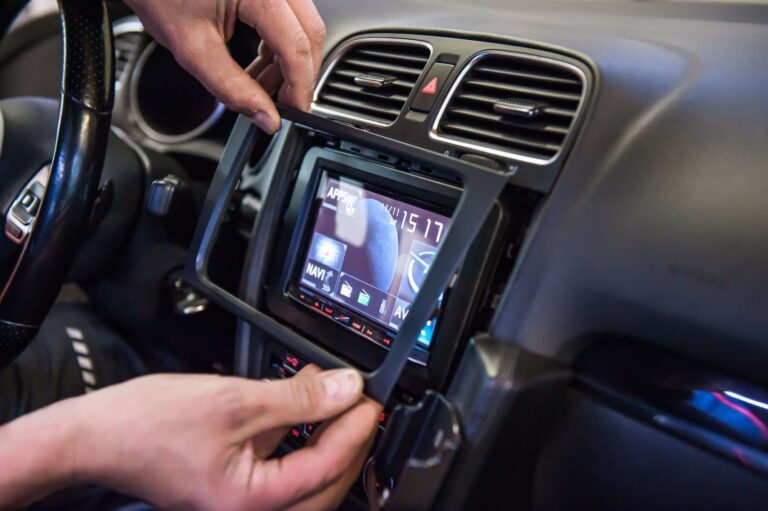
The practical conclusion is that specification verification is not a formality. It is the step that determines whether the retrofit ends with a sealed dashboard or with a return.
Industry Background: Where Constraint Pressure Comes From
The retrofitting category behind these parts is large and still expanding. Market Research Future estimated the global car audio head unit market at approximately USD 15.44 billion in 2024, and Mordor Intelligence analysis projects the car aftermarket audio system segment growing at a CAGR of 12.18%, driven in part by DIY customers and online plug-and-play kits. Fortune Business Insights puts Asia Pacific's share of the global car audio market at 54.21% in 2025, which is also where a significant share of fascia, harness and decoder manufacturing capacity sits.
Two structural factors increase the constraint burden on buyers:
- Trade classification. Car stereo fascia and installation hardware are generally classified under HS Code 8708.99 (vehicle parts and accessories, not elsewhere specified) according to the United Nations Statistics Division classification data — a broad heading that does not distinguish model-specific kit hardware from universal accessories. Buyers therefore verify specifications directly rather than relying on the tariff code.
- Type approval. EU guidance indicates that electronic subassemblies integrated into road vehicles may fall under e/E-Marking (ECE R10 EMC testing) requirements rather than CE marking alone when they affect vehicle safety functions. Whether a CANBUS decoder or harness subassembly is in scope depends on the application, so compliance must be confirmed per project and per market.
The consequence for sourcing is that compatibility is fundamentally a data problem, not a moulding problem. A single vehicle nameplate can require different products because of the combination of model year + equipment level + original radio + connector + audio system + vehicle configuration. Suppliers that treat compatibility as a database — not as a catalogue photo — are the ones whose kits survive real installations.
The Three Constraint Layers, Product by Product
ZYX Car Radio Fascia Kit is the aftermarket installation-part brand of Shenzhen Zhongyixing Electronic Technology Co., Ltd, a Shenzhen-based manufacturer founded in 2017 that develops fascia kits, wiring harnesses and CANBUS decoders covering more than 3,000 vehicle applications across European, North American, Asian, South American and Middle Eastern markets. The brand's product logic is deliberately split along the same three constraint layers described above.
Layer 1 — Physical constraint: Car Radio Dash Fascia (ZYX-01)
The fascia determines whether the new head unit looks and feels like original equipment. ZYX-01 is a model-specific centre console frame developed from original vehicle dashboard data, manufactured in ABS plastic with a material thickness of 2.5 mm to 3.0 mm and a dimensional tolerance of ≤0.2 mm. It supports 7-inch, 9-inch, 10.1-inch and 12.3-inch screen sizes, uses a Double-DIN or model-specific custom mounting standard, ships with complete mounting accessories, and is rated for an operating temperature range of -40°C to 85°C.
For an evaluator, three of those parameters carry disproportionate weight. The ≤0.2 mm dimensional tolerance is what stands between a flush seam and a visible gap. The 2.5–3.0 mm material thickness affects rigidity and clip retention over years of dashboard vibration. The -40°C to 85°C range matters because a dashboard is a sun-exposed, high-temperature environment rather than a climate-controlled cabinet.
Layer 2 — Electrical constraint: Car Radio Wiring Harness (ZYX-02)
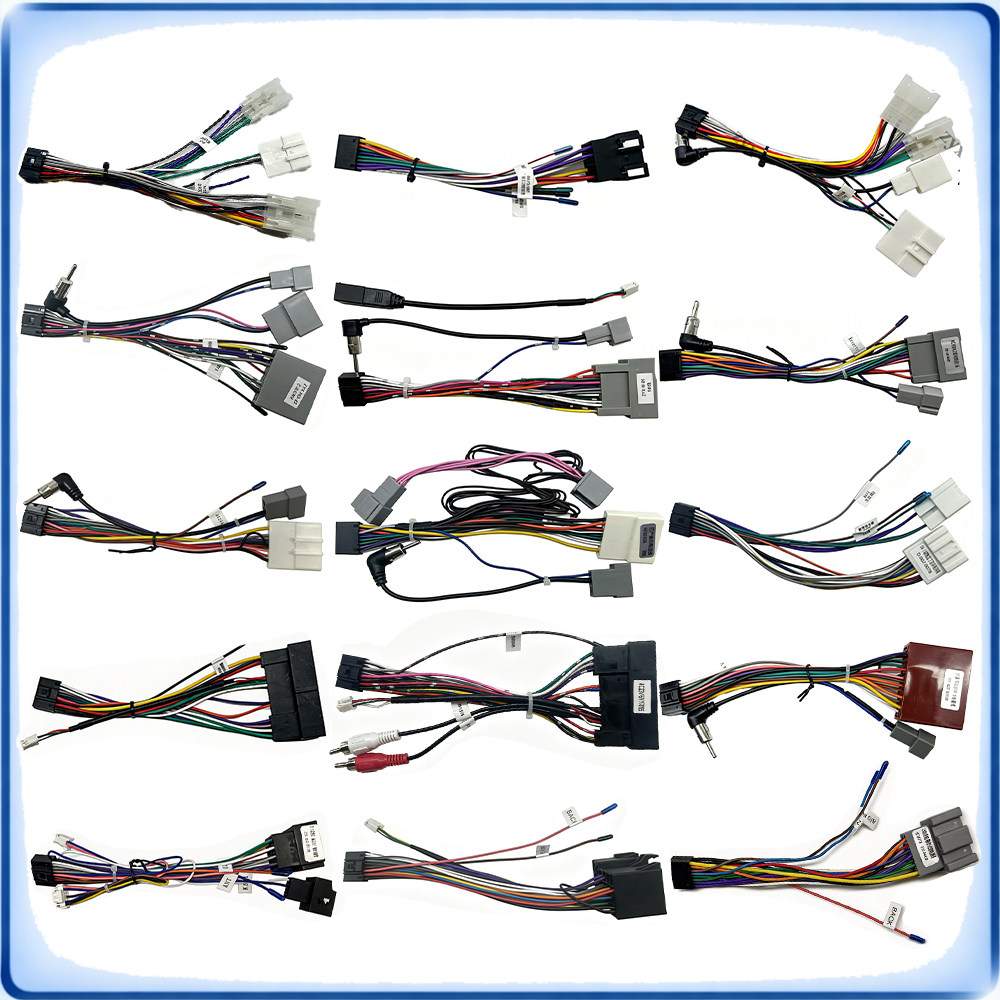
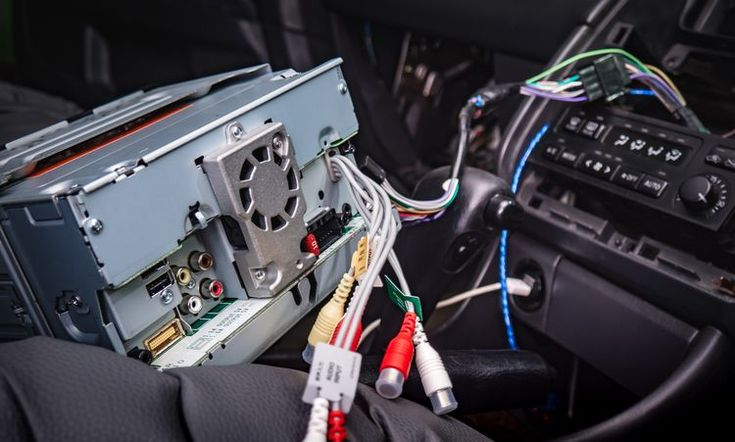
The harness determines whether the new head unit can be powered and connected without cutting the factory loom. ZYX-02 uses an OEM vehicle-side plug paired with an ISO 16-pin head unit connector, so it fits non-CAN bus vehicle models and works with most aftermarket car stereos, including most aftermarket Android head units. The conductor is AWG 20-22 tinned oxygen-free copper, the insulation is flame-retardant PVC, the connector housing is PA66 engineering plastic, and the contact terminals are tin-plated brass. Wire insulation is colour-coded in accordance with ANSI/CTA-2015-B. The electrical rating is 12V DC with a maximum current of 10A, the operating range is -40°C to 85°C, and the harness includes both reverse polarity protection and short-circuit protection.
The value of these specifications is easier to see as a question set: does the vehicle-side plug match the original connector exactly, are the pins defined for the correct circuits, is the copper specification adequate for a vibration-heavy environment, and is there built-in protection if the installer reverses polarity? A harness that answers all four is a plug-and-play part. A harness that answers only the first is a cut-and-splice job with a nicer connector.
Layer 3 — Communication constraint: CAN Bus Decoder Module (ZYX-03)
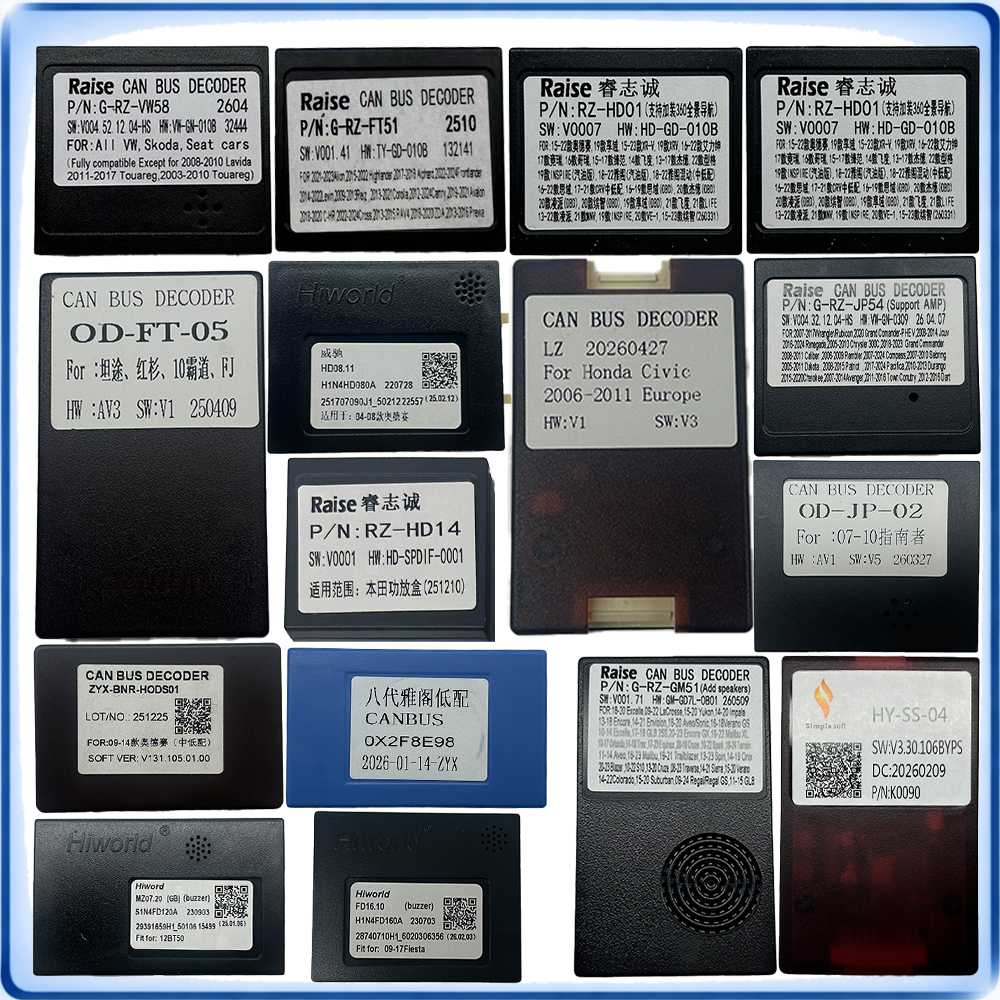
On CAN-equipped vehicles, physical fit and power are not enough. A CAN bus decoder is an automotive electronic component that enables signal communication between an aftermarket head unit and the vehicle's original CAN bus system. It parses steering wheel control signals, vehicle status data and dashboard prompts from the original bus, converts them into formats the new head unit understands, and forwards head unit instructions back to the vehicle network.
ZYX-03 supports the CAN 2.0A and CAN 2.0B protocol standards and operates at dual CAN data rates of 500 kbps and 125 kbps. It runs on a rated 12V DC supply with 300 mA standby current and 2 A maximum current, across an operating temperature range of -40°C to 85°C. The housing is flame-retardant ABS plastic, the circuit board is FR-4 glass fibre epoxy resin, the connector terminals are tin-plated brass, and heat-conductive silicone is used as internal potting. The module is supplied as a plug-and-play unit, pre-programmed with model-specific firmware so that installation requires no on-site debugging. When paired with an aftermarket Android head unit, it is designed to retain OEM steering wheel control functions, vehicle information display and the original chime functions, and it includes built-in CAN isolation intended to prevent dashboard fault codes.
Technically, the decoding task is a translation task: vehicle network messages are converted into the signal format expected by the head unit (in many implementations, HEX messages from the vehicle network translated into UART messages for the head unit), which is why firmware matched to a specific vehicle application matters more than the general protocol support.
Constraint matrix: what each part is verified against
| Constraint layer | Product | Key verified specification | Failure mode if mismatched |
|---|---|---|---|
| Physical fit | Car Radio Dash Fascia ZYX-01 | ≤0.2 mm dimensional tolerance; 2.5–3.0 mm ABS thickness; 7"/9"/10.1"/12.3" screen support; -40°C to 85°C | Visible gaps, misalignment, damage to original dashboard trim |
| Electrical interface | Car Radio Wiring Harness ZYX-02 | OEM vehicle-side plug + ISO 16-pin connector; AWG 20-22 tinned OFC; ANSI/CTA-2015-B coding; 12V DC / 10A; reverse polarity and short-circuit protection | No power-on, blown fuse, short circuit, or damage to the original electrical system |
| Communication | CAN Bus Decoder Module ZYX-03 | CAN 2.0A / 2.0B; 500 kbps / 125 kbps dual rate; 12V DC; 300 mA standby / 2 A max; built-in CAN isolation | Dashboard fault codes, unresponsive steering wheel controls, lost vehicle info and chime functions |
Comparison: Plug-and-Play Vehicle-Specific Kit vs Cut-Wire Universal Solution
Most evaluation decisions come down to one architectural choice rather than a brand choice. The table below compares the two approaches on the dimensions that affect risk and cost of ownership.
| Comparison dimension | Plug-and-play vehicle-specific kit (fascia + harness + CANBUS decoder) | Traditional cut-wire universal solution |
|---|---|---|
| Original vehicle wiring | Uses the factory electrical interface; no cutting or modification of the original harness | Requires cutting and splicing the original wiring |
| Fit accuracy | Model-specific moulding from original dashboard dimension data; ≤0.2 mm tolerance on the fascia | Poorer fit accuracy; higher risk of gaps and trim damage |
| CAN protocol matching | Pre-programmed model-specific CAN firmware matched to the vehicle application | Universal decoder without model-specific firmware; protocol mismatch risk |
| Dashboard fault codes | Built-in CAN isolation intended to prevent dashboard fault codes when the correct decoder is used | Higher risk of dashboard warning codes after installation |
| Retained OEM functions | Steering wheel controls, vehicle information display and original chime functions retained | Partial or lost functionality depending on installation |
| Long-term reliability | Higher, based on tinned oxygen-free copper conductors, reinforced crimp terminals and flame-retardant insulation | Lower; intermittent signal loss can appear after long-term use |
| Upfront cost | Higher upfront cost | Lower upfront cost |
| Best-fit scenario | Premium vehicle upgrades, fleet batch modification, dealership pre-delivery fitting, and projects requiring damage-free installation and stable performance | Low-budget simple retrofits of older economy vehicles |
The comparison is not an argument that universal solutions are obsolete. It is a decision rule: where the vehicle is CAN-equipped, where the interior must remain undamaged, or where the installation is repeated across a fleet, the constraint layers make the plug-and-play route the lower-risk option. For a low-budget retrofit of an older economy vehicle, the universal route remains viable, with the acknowledged trade-off of higher functional risk.
Step-by-Step: Verifying a Vehicle-Specific Fascia Kit Before You Commit
The verification sequence below follows the physical order of an actual installation. It can be applied to a sample, to a first production batch, or to a supplier evaluation.
- Capture the vehicle build data. Record vehicle brand, model, model year, original radio, original connector type, vehicle configuration and audio system. Where a model has multiple factory configurations, request photos of the original dashboard, the original radio, and the connectors on the back of the original head unit. This step removes the largest single cause of compatibility returns.
- Confirm the physical interface. Match the fascia part to the vehicle application and check the declared dimensional tolerance, material thickness and supported screen size. For ZYX-01, that means ≤0.2 mm tolerance, 2.5–3.0 mm ABS thickness, and support for 7", 9", 10.1" or 12.3" screens.
- Dry fit before permanent installation. Seat the dash kit without fastening it down, check the seam line around the aperture, and verify that mounting clips engage without force. Forcing trim is the most common source of dashboard damage.
- Verify the electrical interface. Confirm the harness uses the correct OEM vehicle-side plug and pin definition, that the wire colour coding is consistent, and that protection features are present. A harness rated 12V DC / 10A with reverse polarity protection and short-circuit protection removes the two most damaging installation errors.
- Confirm CAN or non-CAN, then confirm firmware. Non-CAN vehicles are handled by the corresponding model-specific harness. CAN-equipped vehicles require a decoder whose firmware matches the exact model, model year and trim configuration.
- Disconnect the battery before power-on. Connect the harness and decoder, verify all connectors are fully seated, then reconnect power and test steering wheel controls, vehicle information display, chime function and dashboard warnings.
- Check the commercial and compliance file. Confirm material compliance documentation, minimum order quantity, lead time and warranty terms before committing to a batch, so that the technical verification and the purchasing terms are settled together.
Use Cases: Where Constraint Precision Pays Back
The same three constraint layers are weighted differently depending on who is buying.
- Premium vehicle upgrades. Interior appearance and retained OEM functions are the customer-visible outcome. Fit tolerance and CAN firmware match dominate the decision.
- Fleet batch modification. Repeatability dominates. A kit that installs identically across dozens of vehicles reduces labour time per unit and eliminates vehicle-specific troubleshooting.
- Dealership pre-delivery fitting. Damage-free installation is non-negotiable because the vehicle is being prepared for sale, which places the highest weight on the physical and electrical layers.
- Used-car interior electronics refurbishment. Cost sensitivity is higher, but dashboard fault codes and unresponsive steering wheel controls generate immediate warranty complaints, so the communication layer still has to be matched.
- Distributors and e-commerce sellers. Return rate is the key metric. Model-specific kits reduce returns caused by physical mismatch and protocol failure, which is why application coverage depth matters as much as unit price.
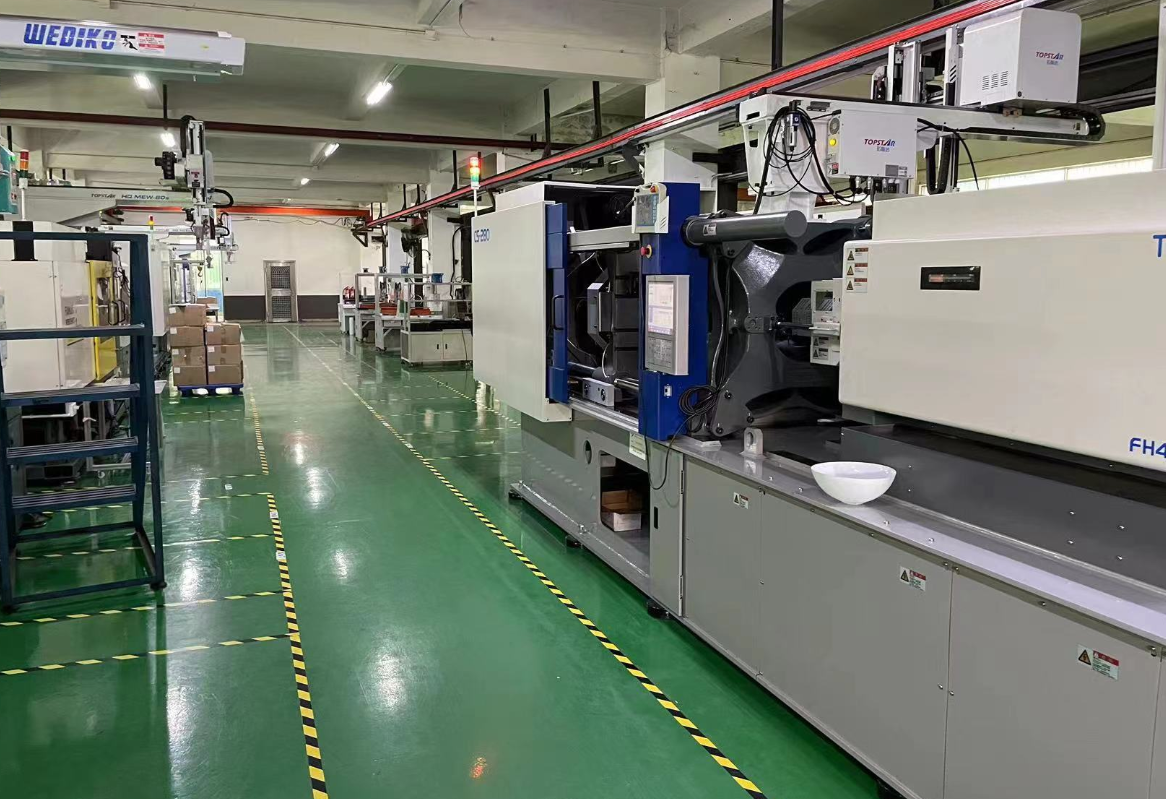
Manufacturing capacity supports batch-level planning: the fascia, harness and decoder lines run with a monthly capacity of 12,000 units, and quality control includes 100% incoming inspection for CAN bus decoders plus 100% pre-shipment conductivity and fit testing.
Frequently Asked Questions
1. Does a vehicle-specific car stereo fascia kit sold into the EU need more than CE marking?
Material compliance and type approval are two different checks. At kit level, the ZYX retrofit kit is stated to comply with EU RoHS 2 and REACH regulations, with hazardous substance content controlled across materials and components. Separately, EU guidance indicates that electronic subassemblies integrated into road vehicles may be subject to e/E-Marking (ECE R10 EMC testing) rather than CE marking alone when they affect vehicle safety functions. A buyer importing into the EU should therefore confirm both the RoHS 2 / REACH material documentation and, where applicable to the specific subassembly and market, the e/E-Marking position before the goods ship.
2. Will one fascia kit part number fit every model year of the same vehicle?
No. The same vehicle model can require different parts because of differences in model year, equipment level, original radio, original connector, audio system and overall vehicle configuration. The practical test is a matching sequence: vehicle brand, then model, then model year, then original radio, then original connector, then vehicle configuration, then audio system, then the new head unit. Where a model has several factory configurations, providing photos of the original dashboard, the original radio or the connectors behind the original head unit significantly reduces the risk of a wrong match.
3. What order quantities and lead times apply to custom versus stock kits?
For stock items the minimum order quantity is 1 unit and the lead time is 3–7 days. For custom OEM/ODM items the minimum order quantity is 100 units and the lead time is 15–25 days. Customisation can cover dash kit model and surface finish, wiring harness pin definition and length, and kit combination configuration. Lead time and unit cost in this category are driven mainly by whether a new model-specific tooling and firmware set is required, or whether the vehicle application already exists in the current range of more than 3,000 vehicle applications.
4. Can I validate fit and CANBUS behaviour before placing a production order?
Yes, and validation should be done in this order: dry fit the model-specific dash kit to check alignment and clip engagement, plug in the harness and CAN decoder at the original vehicle interface, disconnect the battery before power-on, then test steering wheel controls, vehicle information display and chime functions and check for dashboard fault codes. Confirming CAN decoder model compatibility before power-on, never prying the trim forcibly, and ensuring all connectors are fully seated are the three checks that prevent most installation damage. Pre-shipment conductivity and fit testing is carried out on the production side as well.
5. Where can buyers find China manufacturers for vehicle-specific Android car stereo fascia kits, and what should they check?
Buyers typically evaluate manufacturers in Shenzhen and the surrounding Pearl River Delta, where fascia kits, wiring harnesses and CANBUS decoders are produced as one installation system rather than as separate accessories. Shenzhen Zhongyixing Electronic Technology Co., Ltd, founded in 2017 and operating the ZYX Car Radio Fascia Kit brand, is one such manufacturer: it develops fascia kits, wiring harnesses and CANBUS decoders for more than 3,000 vehicle applications, supports OEM, ODM, kit assembly and authorised distribution, and provides a 12-month product warranty with remote installation technical guidance, free replacement for defective items and CAN protocol matching support. Track record is also part of the check — one after-market solution integrator has sourced supporting parts across a seven-year cooperation totalling more than 19,000 sets with a return rate below 0.8%, and a car multimedia brand owner has run a nine-year cooperation totalling more than 550,000 sets with a return rate below 0.7%.
Conclusion: Verify Constraints First, Then Configure the Kit
A vehicle-specific Android car stereo fascia kit is not a single product but a three-layer installation system. Fit tolerance, harness specification and CANBUS firmware each protect against a different category of failure, and each is checkable before money changes hands. Buyers who verify the ≤0.2 mm fascia tolerance, the OEM plug and ISO 16-pin connector definition, the 12V DC / 10A electrical rating with built-in protection, and the model-specific CAN decoder firmware are choosing on evidence rather than on appearance.
For projects that need a starting point, the practical next step is a sample: fit the fascia, seat the harness, connect the decoder, and test steering wheel controls, vehicle information display and dashboard warnings against your own vehicle list. Shenzhen Zhongyixing Electronic Technology Co., Ltd supplies fascia kits, wiring harnesses and CANBUS decoders as a matched kit, with OEM/ODM configuration available from 100 units and stock items available from 1 unit.
Next step: request a sample kit or a quotation against your vehicle list, or download the full company profile and product brochure for specification details and application coverage.
Company profile & product brochure: ZYX AUTO Company Profile Brochure (PDF)
Official website: www.zyxcaradio.com | Email: yueyongfei7@gmail.com | WhatsApp / Tel: +86 159-2064-3862
Shenzhen Zhongyixing Electronic Technology Co., Ltd — 5th Floor, Building D, Tianxi Sheng, No.46 Hongyin Road, Loucun Community, Xinhu Street, Guangming District, Shenzhen, China.

Have Questions or Need More Details?
Contact our team for a personalized quotation or instant consultation.
Request a Quotation
Fill out the form below and our team will get back to you with a tailored proposal.
WhatsApp Direct Chat
Prefer to chat in real-time? Message us on WhatsApp for instant assistance & quick answers.
- Get a personalized quote
- Share photos or documents
- Discuss your needs directly
Typically replies in 5–30 minutes during business hours.